No items found.
No items found.
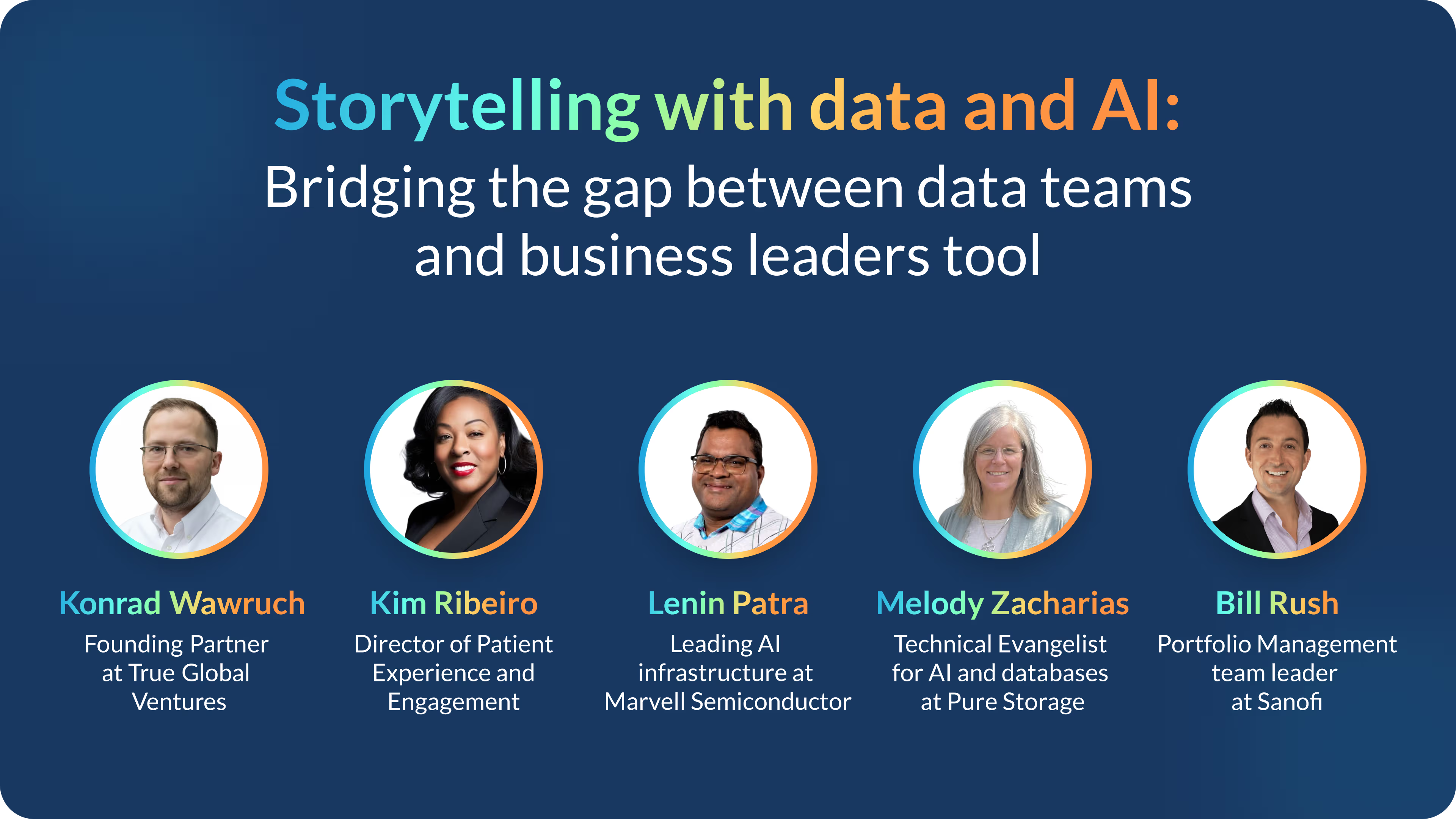
The Articulate 2025 conference in San Francisco was more than just another industry event. It brought together visionary leaders, innovators, and communicators from across industries who weren’t there just to network—they came to share real stories, practical insights, and proven tactics on how artificial intelligence (AI) is transforming the way enterprises communicate, influence, and drive results.
One theme echoed throughout the sessions: while AI in business communication is unlocking new possibilities, the heart of great data storytelling still lies in human empathy, context, and intention. Every conversation explored how teams can use AI not just to move faster, but to create business narratives that truly connect.
This post dives into one of those discussions—how technical and analytics teams can use AI to turn complex data into clear, compelling stories that drive action.
Technical and analytics teams are sitting on massive amounts of data, but turning that into stories people understand isn’t easy. These teams speak the language of algorithms, code, and statistical models—while business leaders speak in terms of growth, ROI, and outcomes.
As Bill Rush, who leads the Portfolio Management team for Sanofi within the US Market Access, explained, “It’s like engineers are speaking in AI vectors while commercial leaders speak in profitability.” The tricky part? Most teams don’t even realize a translation problem exists.
This communication gap is what the panel called the curse of knowledge—when experts are so deep in their fields that they forget how to simplify for others. Melody Zacharias, Technical Evangelist for AI and databases at Pure Storage, described it as sharing “lists of brilliance”—detailed technical achievements that sound impressive but lack a clear business message.
The result? Valuable insights get lost in translation—an ongoing challenge in technical communication and data-driven decision making across organizations undergoing digital transformation.
“If data storytelling doesn’t lead to understanding, it’s just noise,”
- Kim Ribeiro
AI is quickly emerging as a powerful translator—bridging the gap between technical detail and business relevance. The panel explored how enterprise AI adoption is reshaping how teams share actionable insights and communicate value.
“AI helps us find the why behind the numbers faster,”
- Lenin Patra
This shift empowers technical teams to transform complex information into business intelligence, fuelling better data-driven decision-making and accelerating business transformation.
Even with AI’s help, many technical teams still rely heavily on dashboards to share insights. Dashboards are useful—they visualize what’s happening in the business—but they often stop there. They show data, not direction.
This was a key point raised by the panel: while dashboards are an essential part of data visualization and data storytelling, they often fail to explain why something is happening or what should be done next. Without interpretation or narrative context, they can leave business leaders with more questions than answers.
“Dashboards are nice to look at, but they rarely tell you what to do next.”
- Melody Zacharias
Numbers and charts alone don’t inspire action—they need to be brought to life with purpose, empathy, and a clear message.
AI is beginning to change that.
When integrated with AI-powered reasoning and natural language processing, dashboards evolve from static visuals into dynamic storytelling tools. They interpret trends, highlight risks, and even recommend next steps, helping bridge the gap between analytics and business action.
“AI is helping us transform dashboards into narratives that speak to the business,” said Lenin Patra. “They don’t just show data—they tell you what it means and why it matters.”
This evolution marks a significant step forward in business communication with AI, where visual insights become actionable narratives that drive strategic change.
While AI tools can make data more accessible and dashboards more insightful, true communication still depends on context. Data storytelling isn’t just about visualizing information—it’s about shaping a message that resonates with different audiences.
That’s where context engineering comes in. The panel emphasized that successful use of AI in communication requires more than clever prompting—it requires clarity about what problem you’re solving, why it matters, and who you’re speaking to.
Kim Ribeiro, Director of Patient Experience and Engagement, shared how her team uses a simple framework to ground their AI storytelling process:
Only after these steps should teams start building prompts for large language models, generative AI tools, or visualization platforms. This structure ensures the story remains focused, relevant, and actionable—qualities that matter most in business communication.
Melody Zacharias added that understanding the audience is just as critical. Through persona mapping and audience research, teams can align tone, visuals, and depth of detail with what the audience actually needs. And because AI’s first draft is rarely perfect, iteration is key. The panel encouraged teams to interact, refine, and rework until the message feels both authentic and impactful.
“Prompting without context is like speaking without listening,”
- Melody Zacharias
Prezent was built on the idea of simplifying business communication for professionals. Its Communication Fingerprints feature helps teams understand their audience and tailor tone, visuals, and messaging for greater impact. Paired with Auto-generator, which uses contextual intelligence to craft clear and relevant stories, professionals can turn complex information into presentations that truly connect—making communication faster, more human, and audience-first.
Even the best frameworks and AI-powered dashboards can’t replace human empathy. Context builds clarity, but empathy builds connection—the foundation of empathy in leadership and effective storytelling.
While AI can generate solid technical output, it takes human judgment to translate that output into real business value. Melody shared a helpful example to illustrate the gap between technical output and real business value. AI might report that performance improves by 30%—a statement that sounds positive but doesn’t tell a leader much. A human expert, however, can translate that into something meaningful and actionable, such as data now delivers in under an hour. That shift in framing is what turns information into impact, and it’s something AI can’t do on its own.
Panelist Konrad Wawruch, Founding Partner at True Global Ventures, echoed this concern. He explained that when teams rely too heavily on AI, communication starts to feel over-standardized. Messages become polished but generic, making it harder for audiences to understand what’s unique—or what really matters.
To maintain authenticity, panelists suggested a few practical habits:
As Melody Zacharias summarized during the discussion, “AI can help you tell the story faster, but only people can make it felt.”
Solutions like Astrid AI from Prezent show how enterprise presentation automation can balance efficiency with empathy. By combining audience understanding and brand context, Astrid AI helps business storytellers maintain that essential human-in-the-loop connection—ensuring every presentation feels authentic, empathetic, and aligned with the organization’s voice. It’s a powerful example of how technology can enhance, not replace, the human touch in business communication.
At the heart of this discussion is one powerful truth: even in the age of AI, great storytelling is still deeply human.
As Bill Rush of Sanofi put it best, “Technology gives us speed. Storytelling gives us purpose.”
AI is an incredible accelerator—it can organize information, simplify complexity, and take care of the heavy lifting that used to slow teams down. But there’s a tradeoff. When everything becomes automated, communication can start to sound the same.
That’s why the role of today’s technical communicator is shifting—from crunching numbers and writing reports to becoming a true context engineer. The real skill lies in knowing how to use AI in business communication mindfully, how to guide it through clear frameworks and smart prompt engineering so the technology serves a specific purpose and speaks to real people.
At its best, AI doesn’t replace the storyteller—it supports them. It frees people to focus on what machines can’t do: bringing empathy, passion, and genuine emotion into the story. That’s the magic that connects with others and drives real change.
Want to go deeper?
Watch the full panel discussion from Articulate 2025 here.
This post is just one highlight from Articulate 2025. Stay tuned for more actionable insights from upcoming panels on leadership, business innovation, and AI-powered communication—all coming soon.
.webp)
Supriya is a Content Strategist and Creator at Prezent AI with extensive experience in brand storytelling, digital strategy, and B2B content. She has worked across SaaS and technology-driven businesses, building content engines that drive awareness, engagement, and pipeline growth. Passionate about crafting clear, insight-led narratives, Supriya focuses on turning complex ideas into compelling stories that resonate with modern business audiences. You can connect with her on LinkedIn.